



Redford Township sits farther north than the Taylor clinic, but Telegraph Road provides a nearly continuous route between the two communities. Most trips from central Redford take about 20 to 25 minutes. For patients in the 48239 and 48240 ZIP code areas, that offers an alternative to navigating downtown Detroit or coordinating care through a large hospital system.
The Redford page is especially relevant for people whose legs feel different at the end of a shift than they do in the morning. Long hours at a desk, behind the wheel, on a sales floor, or in a job that requires standing can reveal swelling, aching, cramps, or heaviness caused by venous reflux. These symptoms can be easy to attribute to age, back pain, or general fatigue without checking how blood is moving through the leg veins.
Dr. Ganesh Ramaswami uses a diagnostic-first approach. As a board-certified surgeon and Registered Physician in Vascular Interpretation, he reviews symptoms alongside duplex ultrasound findings before recommending a procedure. His academic background, including a PhD and more than 60 surgical publications, supports a careful approach rather than a standard treatment for every patient.
The clinic accepts most major insurance plans, Medicare, Medicaid, and many HMO plans. Free insurance verification and prior authorization support help Redford patients understand the financial process before a medically necessary treatment is scheduled.
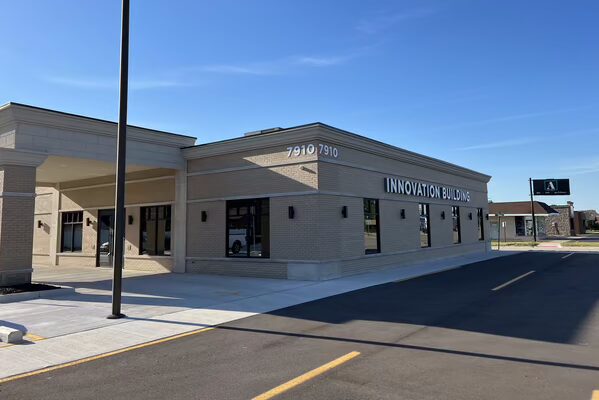
Our clinic at 12701 Telegraph Rd, Suite 102, Taylor, MI 48180 is accessible from Redford by several major roads:
Telegraph Road South: Take Telegraph Road south through Dearborn Heights and continue into Taylor. The clinic is near Wick Road. Approximately 20 to 25 minutes from central Redford.
Beech Daly Road South: Follow Beech Daly Road south, turn east on Ecorse Road or Wick Road, and continue toward Telegraph Road. About 22 to 25 minutes, depending on traffic.
I-96 to M-39 and I-94: Take I-96 east to the Southfield Freeway, connect with I-94 West, and exit toward Telegraph Road. This route may suit eastern Redford. Approximately 25 to 30 minutes.
Mon – Fri: 9:00am – 5:00pm
Sat – Sun: Closed
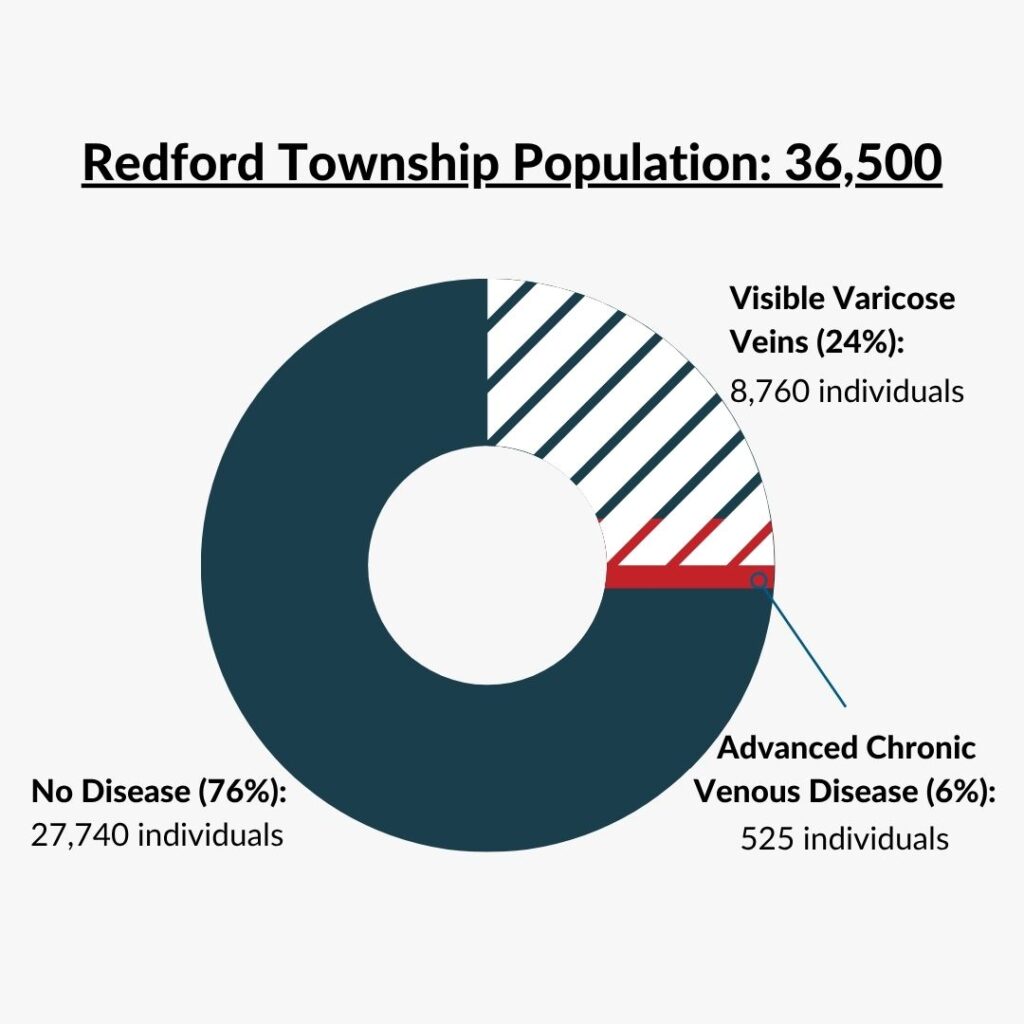
Venous conditions such as varicose veins affect a significant number of adults. Research indexed by the National Library of Medicine estimates that approximately 24% of adults have visible varicose veins, while about 6% have a more advanced form of chronic venous disease.
Redford Township has an estimated adult population of roughly 36,500 residents. Based on these national estimates, approximately 8,760 local adults may have visible varicose veins, while around 2,190 could be living with chronic venous disease.
Symptoms such as tired or heavy legs, swelling around the ankles, nighttime cramping, itching, restless legs, or veins that become more prominent over time are worth paying attention to. They may be connected to underlying venous reflux rather than ordinary fatigue.
A duplex ultrasound can confirm whether abnormal blood flow is present, identify the affected vein, and help the provider recommend monitoring, compression, or a minimally invasive procedure when appropriate.
Office-based treatment can reduce the disruption associated with older surgical approaches. Many procedures take 15 to 45 minutes, allowing patients to plan care around the responsibilities and recreation that shape daily life in Redford:
A vein evaluation will not explain every type of leg discomfort, but it can determine whether venous reflux is one part of the problem. Contact the Taylor clinic when symptoms are recurring, worsening, or changing how you move through the day.
The treatment decision begins with the ultrasound map. If a straight section of a larger superficial vein is refluxing, radiofrequency ablation may be appropriate. If a non-thermal approach better fits the anatomy or treatment plan, VenaSeal may be considered. The goal in either case is to close the malfunctioning vein so blood can use healthier pathways.
Not every vein can or should be treated the same way. Foam-based therapy can reach twisting branches, compounded sclerotherapy can address selected small veins, and laser treatment may be used for superficial cosmetic vessels. Microphlebectomy is reserved for prominent veins that need to be removed through tiny openings.
Insurance plans often require documentation of symptoms, ultrasound findings, and sometimes conservative care before authorizing a medical procedure. The Taylor team helps organize that process, which is particularly useful for Redford patients balancing treatment with work schedules and transportation.
After the underlying problem is addressed, follow-up imaging confirms the treated vein has closed as intended and helps determine whether any remaining surface veins require additional care.

Taylor Vein Solutions accepts most major insurance plans, including Medicare, Medicaid, and many HMO plans. Our team provides free insurance verification and assists with prior authorization when required.


Our treatment options are designed to address varicose veins, spider veins, and underlying venous reflux through small incisions, injections, catheter-based procedures, or medical adhesive when appropriate.
Highly trained vein specialist

When venous valves are damaged, remaining in one position can increase pressure in the lower legs. Symptoms may include heaviness, swelling, aching, itching, or cramps. Other conditions can cause similar symptoms, so an examination and ultrasound are needed to identify the source.
Long periods of sitting can reduce the help that calf muscles provide in moving blood upward. Sitting does not cause every vein condition, but it can aggravate symptoms in someone who already has weak valves or venous reflux.
The drive is generally 20 to 25 minutes from central Redford using Telegraph Road. Travel time varies by neighborhood and traffic.
Ultrasound shows the direction of blood flow, identifies valves that are not closing correctly, and maps the vein anatomy. This helps the provider avoid treating only the visible branch while missing a larger refluxing vein.
Compression can reduce swelling and heaviness while it is being worn, but it does not repair a damaged valve or permanently close the vein. It may still be recommended as symptom management or as part of an insurance requirement.
Many plans do. Requirements vary and may include documented symptoms, ultrasound findings, and a period of conservative care. Taylor Vein Solutions verifies benefits and prepares authorization paperwork when required.
No single treatment is right for every patient. VenaSeal may be considered when the vein anatomy and medical history support a non-thermal closure method. The provider reviews ultrasound findings and other health factors before recommending it.
Progressive venous disease can contribute to itching, inflammation, discoloration, thickened skin, or ulcers near the ankle. Worsening skin changes or a wound that heals slowly should be medically evaluated.


