


Plymouth patients often want treatment that resolves a medical concern without creating a major interruption to work, exercise, or time downtown. Taylor Vein Solutions in Romulus serves both Plymouth city and Plymouth Township, including the 48170 ZIP code area. The clinic is approximately 17 to 18 miles away, with most trips taking about 23 to 30 minutes depending on the route and starting neighborhood.
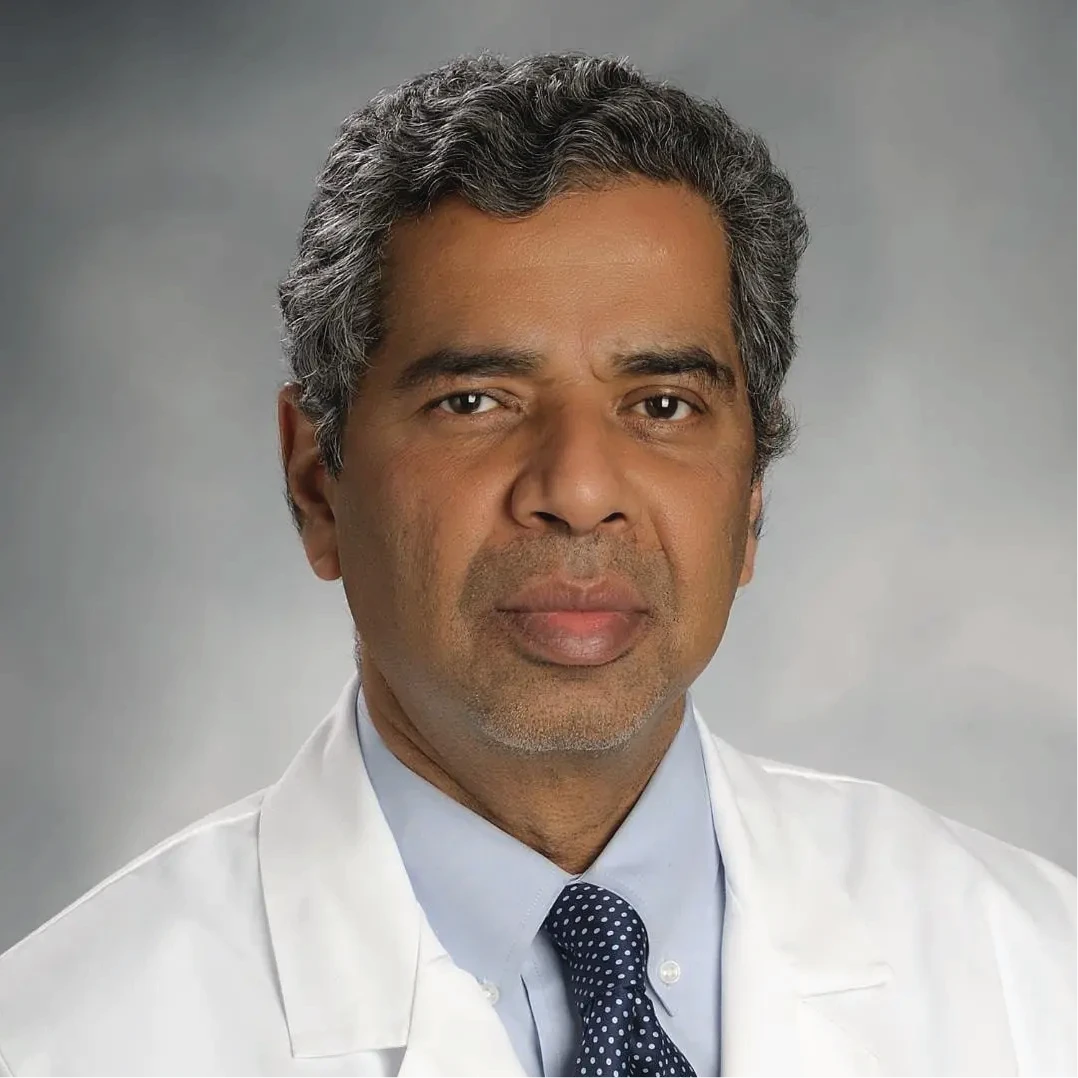
The consultation is designed to separate appearance from circulation. Small spider veins may be cosmetic, while heaviness, swelling, cramping, or skin changes may point to venous reflux. Dr. Ganesh Ramaswami is a board-certified surgeon with Royal College of Surgeons fellowship, a PhD from the University of London, and advanced vascular ultrasound credentials. A same-day ultrasound is often available so the team can review the anatomy before discussing treatment.
Taylor Vein Solutions works with most major insurers, Medicare, Medicaid, and many HMO plans. Free benefits verification and prior authorization support help patients understand medical coverage. Cosmetic treatment options and likely session needs can be discussed separately when insurance does not apply.
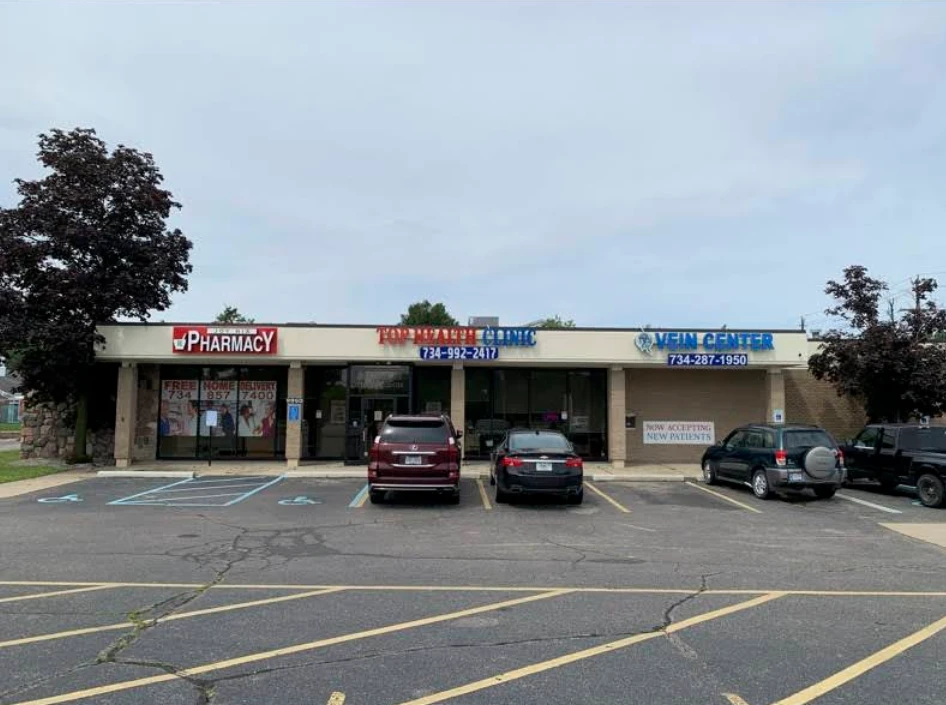
Our clinic at 9950 Wayne Rd, Suite 300, Romulus, MI 48174 can be reached from Plymouth and Plymouth Township through several routes:
I-275 South to I-94 East: Take I-275 South, merge onto I-94 East, and use the Wayne Road exit. Travel south on Wayne Road to the clinic near Goddard Road. Approximately 23 to 28 minutes.
Haggerty Road to Van Born Road: Follow Haggerty Road south, turn east on Van Born Road, and then continue south on Wayne Road into Romulus. About 25 to 30 minutes from western Plymouth Township.
Sheldon Road to Michigan Avenue: Take Sheldon Road south toward Canton and Wayne, turn east on Michigan Avenue, and then use Wayne Road south to reach the office. Approximately 28 to 32 minutes from downtown Plymouth.
Mon – Fri: 9:00am – 5:00pm
Sat – Sun: Closed
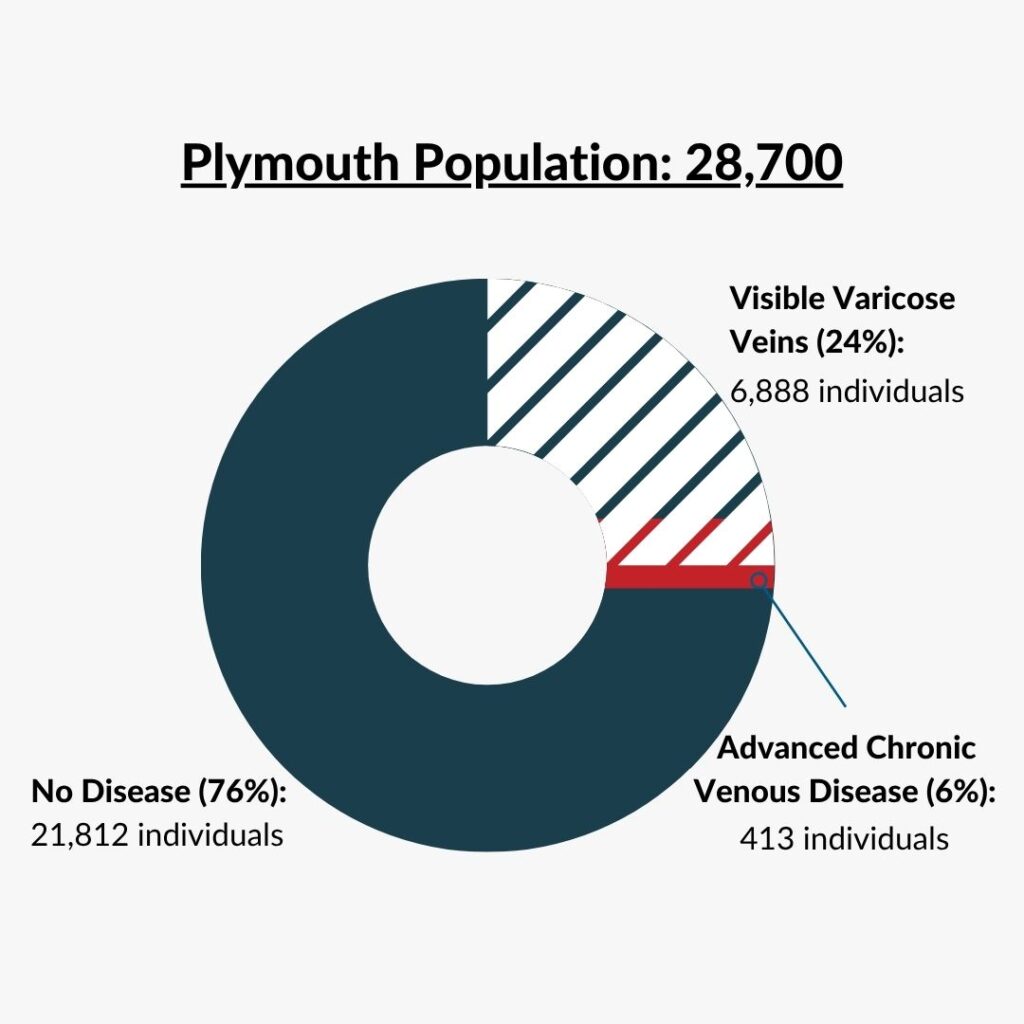
Visible varicose veins are common, but they are not always only a cosmetic issue. Research indexed by the National Library of Medicine estimates that approximately 24% of adults have visible varicose veins, while about 6% show evidence of advanced chronic venous disease.
Plymouth city and Plymouth Township have a combined estimated adult population of roughly 28,700 residents. Applying these national estimates suggests that approximately 6,890 local adults may have visible varicose veins, while around 1,720 could be affected by a more advanced venous condition.
Heavy or tired legs, ankle swelling, nighttime cramps, itching, restless legs, skin discoloration, or veins that become more noticeable over time may indicate that circulation should be evaluated. Active people can have venous reflux even when they exercise regularly.
Duplex ultrasound can determine whether the concern is limited to surface veins or connected to damaged valves below the skin. The findings help the provider recommend observation, compression, or minimally invasive treatment.
Many procedures take only 15 to 45 minutes and require little interruption to normal activity. With an individualized recovery plan, patients can get back to the Plymouth places that are part of their routine:
Aching or swollen legs should not make a normal walk downtown feel like a major effort. Schedule a consultation at the Romulus clinic to learn whether vein treatment may help you move more comfortably.
The most noticeable vein is not always the vein causing the pressure. Duplex ultrasound helps identify reflux below the surface and shows whether visible branches are connected to a larger diseased vein. This allows the care team to distinguish a cosmetic concern from a medical circulation problem.
Radiofrequency ablation and VenaSeal are options for larger refluxing veins. Foam-based treatment can reach curved or branching veins, while compounded sclerotherapy and laser address smaller surface vessels. Microphlebectomy is used for raised veins that are better removed through tiny openings.
When a patient wants both symptom relief and cosmetic improvement, treatment may be staged. The underlying reflux is addressed first, followed by remaining spider or surface veins after circulation has been reassessed. Procedure time, exercise restrictions, compression needs, and insurance requirements are explained in advance.
Whether you live downtown or in Plymouth Township, the Romulus office can provide imaging, a treatment recommendation, and follow-up care through one team. Call or schedule online to begin.
Taylor Vein Solutions accepts most major insurance plans, including Medicare, Medicaid, and many HMO plans. Our team provides free insurance verification and assists with prior authorization when required.
Our treatment options are designed to address varicose veins, spider veins, and underlying venous reflux through small incisions, injections, catheter-based procedures, or medical adhesive when appropriate.
Highly trained vein specialist
Yes. The clinic serves downtown Plymouth, Plymouth Township, and patients throughout the 48170 ZIP code area.
The clinic is approximately 17 to 18 miles away. Typical travel time is about 23 to 30 minutes using I-275, I-94, Haggerty Road, Van Born Road, or Wayne Road.
Pain, swelling, heaviness, skin changes, or ulcers can suggest a medical condition, but appearance alone cannot confirm the cause. A duplex ultrasound can show whether underlying reflux is present.
Light walking is often encouraged soon after treatment. The timing for running, cycling, weight training, or strenuous exercise depends on the procedure and your recovery. The care team provides specific guidance.
VenaSeal uses a medical adhesive delivered through a small catheter to seal a diseased vein. Blood then reroutes through healthier vessels. Because it is non-thermal, it does not use heat.
Many procedures take 15 to 45 minutes. Sclerotherapy commonly takes about 20 to 40 minutes, while microphlebectomy may take longer depending on the number of veins being removed.
Most plans cover medically necessary care when symptoms and ultrasound findings meet their criteria. The office accepts Medicare, Medicaid, and many HMO plans and can verify benefits before treatment.
The team reviews symptoms, medical history, and treatment goals. A same-day ultrasound is often available to evaluate blood flow, after which the provider explains the findings and recommended next steps.


