


Vein treatment often involves more than one visit, so a manageable route matters. Taylor Vein Solutions in Romulus is about 12 to 13 miles south of Livonia, and most patients from the 48150, 48152, and 48154 ZIP code areas reach the office in roughly 20 to 25 minutes. Evening hours on several weekdays and Saturday availability can also make consultations and follow-up care easier to fit around work, family, and other appointments.
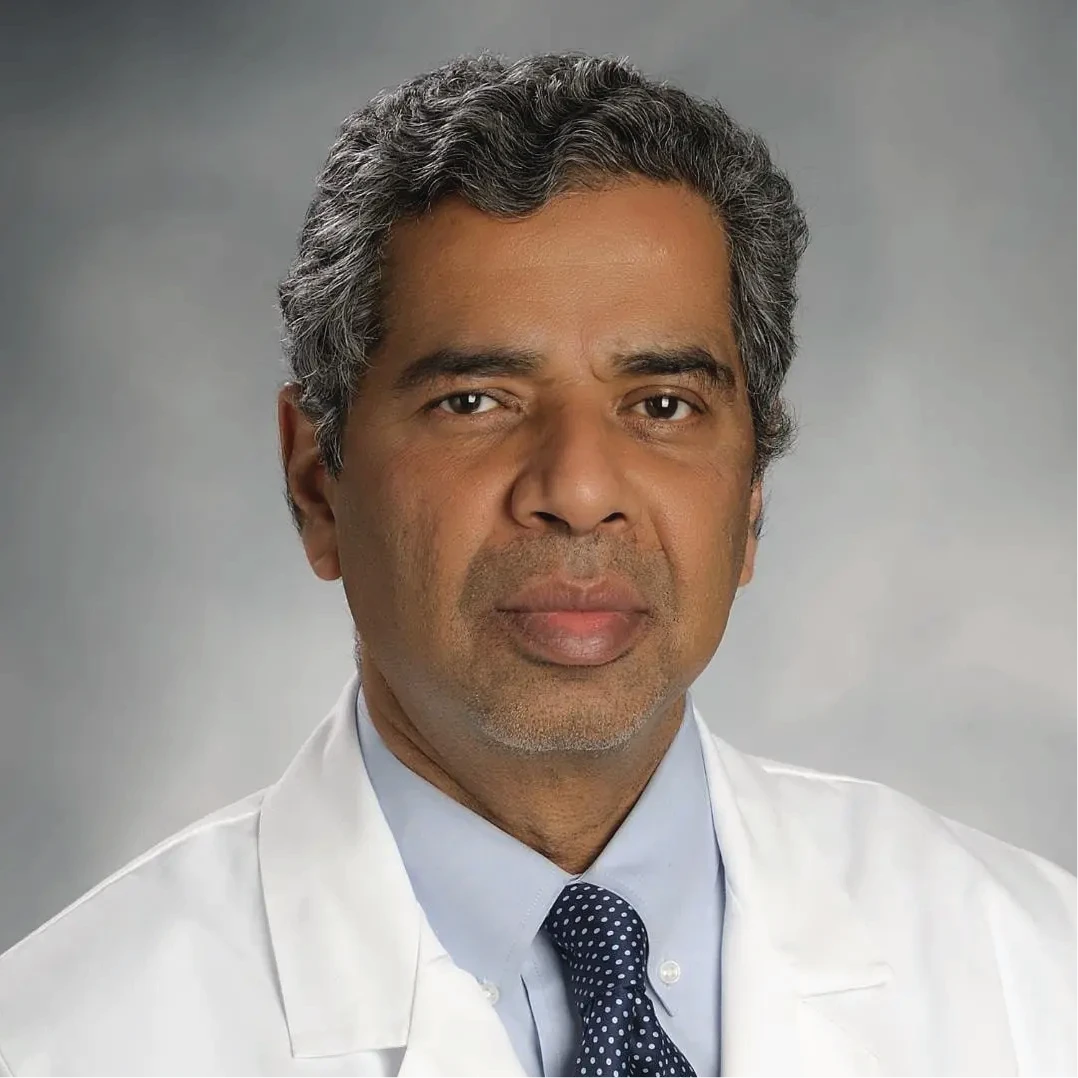
The clinical focus is on finding the reason behind the symptoms, not simply treating the most visible vein. Dr. Ganesh Ramaswami is a board-certified surgeon, a Fellow of the Royal College of Surgeons, and a Registered Physician in Vascular Interpretation. His training in vascular imaging helps the team use duplex ultrasound to identify reflux, map the affected vein, and explain why swelling, heaviness, cramping, or skin changes may be occurring.
A same-day ultrasound is often available when medically appropriate. The Romulus team also works with most major insurance plans, including Medicare, Medicaid, and many HMO plans, and offers free benefits verification. Patients can review coverage, likely treatment steps, and cosmetic options before deciding how to proceed.
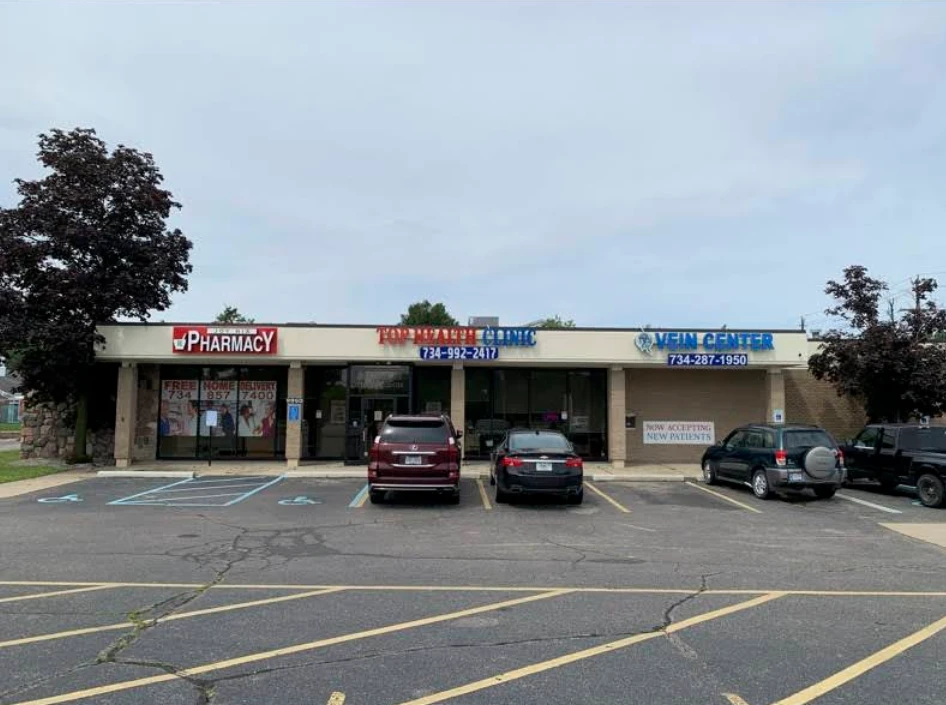
Our clinic at 9950 Wayne Rd, Suite 300, Romulus, MI 48174 is accessible from Livonia by several major north-south routes:
Merriman Road South: Follow Merriman Road south toward Detroit Metro Airport, merge onto I-94 West, and take the Wayne Road exit. Travel south on Wayne Road to the clinic near Goddard Road. Approximately 20 to 25 minutes from central Livonia.
I-275 South to I-94 East: From western Livonia, take I-275 South, merge onto I-94 East, and exit at Wayne Road. Continue south to the office. About 22 to 27 minutes, depending on traffic.
Middlebelt Road to Van Born Road: Take Middlebelt Road south, turn west on Van Born Road, and then continue south on Wayne Road into Romulus. Approximately 25 to 30 minutes from eastern Livonia.
Mon – Fri: 9:00am – 5:00pm
Sat – Sun: Closed
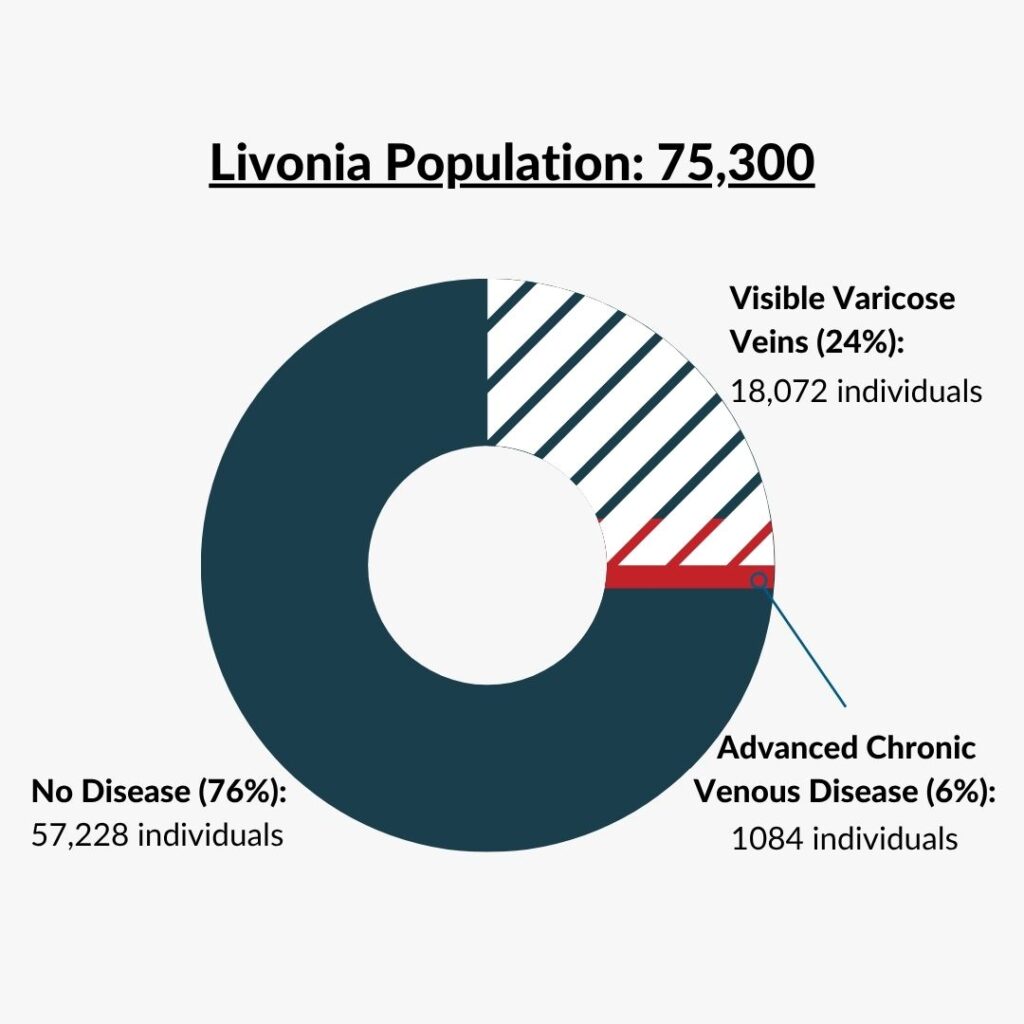
Venous diseases, including varicose veins, are common throughout the United States. Research indexed by the National Library of Medicine estimates that approximately 24% of adults have visible varicose veins, while about 6% are living with more advanced chronic venous disease.
Livonia has an estimated adult population of roughly 75,300 residents. Applying these national estimates suggests that approximately 18,100 local adults may have visible varicose veins, while about 4,520 could be affected by chronic venous disease.
Recurring ankle swelling, leg fatigue, aching, nighttime cramps, itching, skin discoloration, or veins that continue to enlarge should not automatically be dismissed as part of a busy day. These changes may indicate that damaged valves are allowing pressure to build in the lower legs.
Duplex ultrasound can show whether the concern is limited to the surface or connected to underlying venous reflux. Based on the findings, the provider can discuss monitoring, compression, or minimally invasive treatment when appropriate.
Many modern vein procedures are completed in 15 to 45 minutes, and most patients return to ordinary activities quickly. That shorter recovery window can make it easier to stay involved in the Livonia routines you value:
When leg discomfort starts changing how far you walk or how long you stay active, an evaluation can provide useful answers. Schedule a visit at the Romulus clinic to find out whether a vein condition is contributing.
Two patients with similar-looking veins may need very different care. Duplex ultrasound helps the Romulus team determine whether a surface vein is isolated or being supplied by a larger vein with faulty valves. That distinction guides the treatment plan and helps avoid focusing only on appearance.
Radiofrequency ablation and VenaSeal are used for larger refluxing veins, while foam-based therapy can reach curved or branching veins that are not ideal for a catheter. Compounded sclerotherapy and laser treatment address smaller varicose veins and spider veins. Microphlebectomy may be recommended when a raised surface vein is better removed through tiny openings.
The provider considers symptoms, ultrasound findings, vein size, previous treatment, recovery needs, and insurance rules before recommending a procedure. When both medical reflux and cosmetic veins are present, care can be staged so the circulation problem is addressed first.
Livonia patients can complete imaging, treatment planning, and follow-up through the Romulus office. Contact Taylor Vein Solutions to discuss your symptoms and receive a recommendation based on what the ultrasound shows.

Taylor Vein Solutions accepts most major insurance plans, including Medicare, Medicaid, and many HMO plans. Our team provides free insurance verification and assists with prior authorization when required.


Our treatment options are designed to address varicose veins, spider veins, and underlying venous reflux through small incisions, injections, catheter-based procedures, or medical adhesive when appropriate.
Highly trained vein specialist
Most patients travel about 12 to 13 miles and reach the clinic in roughly 20 to 25 minutes using Merriman Road, I-275, I-94, or Wayne Road. Travel time varies by neighborhood and traffic.
Vein-related swelling often becomes more noticeable later in the day and may occur with heaviness, aching, visible veins, itching, or skin changes. Because swelling has several possible causes, an examination and duplex ultrasound are needed to confirm whether reflux is involved.
Medicare commonly covers medically necessary treatment when symptoms, conservative care, and ultrasound findings meet the required criteria. Taylor Vein Solutions accepts Medicare and can verify benefits before a procedure is scheduled.
Depending on the anatomy, larger refluxing veins may be treated with radiofrequency ablation, VenaSeal, or foam-based vein therapy. Ultrasound findings help the provider choose the safest and most effective option for the affected vein.
Depending on the anatomy, larger refluxing veins may be treated with radiofrequency ablation, VenaSeal, or foam-based vein therapy. Ultrasound findings help the provider choose the safest and most effective option for the affected vein.
Compression can reduce swelling, aching, and heaviness, but it does not repair a damaged valve or permanently close a refluxing vein. The ultrasound results help determine whether compression alone is reasonable or whether another treatment should be considered.
Light walking is commonly encouraged, and many patients return to routine activities the same day. Restrictions vary by procedure, and microphlebectomy may require 24 to 48 hours of lighter activity.
Yes. When underlying reflux and cosmetic spider veins are both present, the medical problem is usually addressed first. Remaining surface veins can then be treated with sclerotherapy or laser when appropriate.


